
Emotionally Numb After Loss

by: Dr. Tammy Isaac

After loss, many people expect grief to feel overwhelming. They expect tears, heaviness, or a constant ache that confirms something important has been lost.
But for some, grief feels like nothing at all.
Instead of sadness, there is numbness. Instead of emotion, there is distance. Days move forward, responsibilities get done, and life continues, yet internally everything feels flat or muted. This experience often brings confusion and self doubt. People begin to wonder why they are not feeling what they think they should.
Being emotionally numb after loss does not mean you are avoiding grief or disconnected from love. It means your body is responding to something overwhelming in a way that allows you to keep going.
Emotional numbness is not the absence of grief. It is grief moving quietly; at a pace your system can manage.
When Grief Goes Quiet
Emotional numbness is one of the most misunderstood grief responses. Not because it is rare, but because it does not match the way grief is often portrayed. When there are no tears or visible signs of distress, people assume something is wrong.
Grief affects more than emotions. It impacts the nervous system, the body, sleep, focus, and energy. When loss feels too heavy to process all at once, the body may limit emotional access to prevent overwhelm. Numbness becomes a form of protection. It creates containment until there is enough capacity to feel more. This response is not chosen. It happens automatically. It is the body saying, “This is a lot, and we need to move slowly.”
What Emotional Numbness Can Look Like
Emotional numbness does not look the same for everyone. It may show up as:
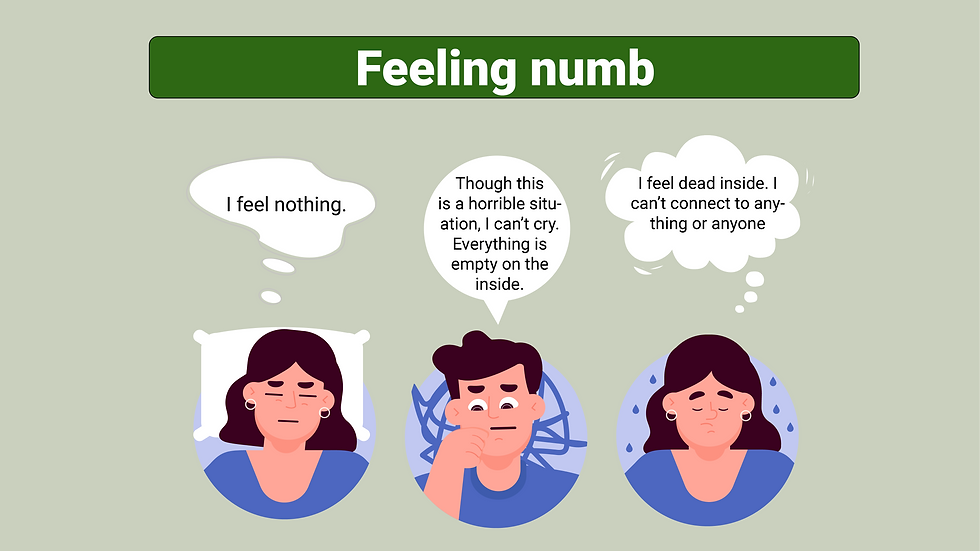
Feeling flat or disconnected from yourself or others
Moving through daily life on autopilot
Difficulty crying even when you think you should
Little reaction to memories, news, or milestones
Saying “I’m fine” and realizing it feels true.
Because numbness is quiet, it often leads to self-questioning. People worry they are avoiding grief or that their love was not deep enough. These concerns are common, but they are not accurate reflections of what is happening.
Why Emotional Numbness Happens
Sudden or traumatic losses often lead to numbness. When something happens without warning, the nervous system may not yet feel safe enough to release emotion. Long term caregiving losses can also result in numbness. When someone has spent months or years holding it together, managing responsibilities, and preparing for loss, the body often remains guarded even after the loss occurs. Numbness may also appear when losses stack closely together, when there was no space to grieve at the time of loss, or when emotional expression was discouraged earlier in life. In each of these situations, numbness is not avoidance. It is survival. It is the body choosing stability over overwhelm.
The Fear of Feeling Nothing
One of the most difficult parts of emotional numbness is what people tell themselves about it. Many worry that feeling nothing means they did not love enough. Others fear the emotions will never return. There is guilt when life continues, routines resume, or moments of laughter appear alongside numbness. But grief does not follow one emotional pattern. Crying is not the only proof of loss. Silence is not failure. Feeling nothing right now does not mean nothing is happening. It means the body is pacing what it can handle.
What Helps When You Feel Emotionally Numb
The goal is not to force emotion. Forcing feeling often deepens shutdown. What helps most is creating safety.
This can include:
Naming the numbness without judgment
Grounding the body through gentle movement or steady breathing
Allowing rest without explaining your grief style to others
Talking with someone who understands grief and does not rush the process
Letting numbness be present without trying to fix it
As the body senses safety, emotion often returns gradually and in unexpected ways. There is no timeline for this process.
When Additional Support Matters
If numbness lasts a long time and begins to narrow your world, or if it is paired with isolation, despair, or thoughts of wanting to disappear, additional support is important. Seeking support does not mean something is wrong with you. It means your system has been holding a great deal and deserves care. Grief is not meant to be carried alone.
Grief does not always arrive loudly. Sometimes it arrives as quiet endurance. Sometimes it arrives as numbness that holds you together when everything else feels too heavy. If you are emotionally numb after loss, you are not broken. You are responding in the way your body knows how. Grief will find its voice when it is ready. Until then, your presence is enough.

This blog coincides with "When Feeling Nothing Is Still a Grief Response" episode on the Permission to Breathe Podcast, available on Spotify and Apple Podcasts.
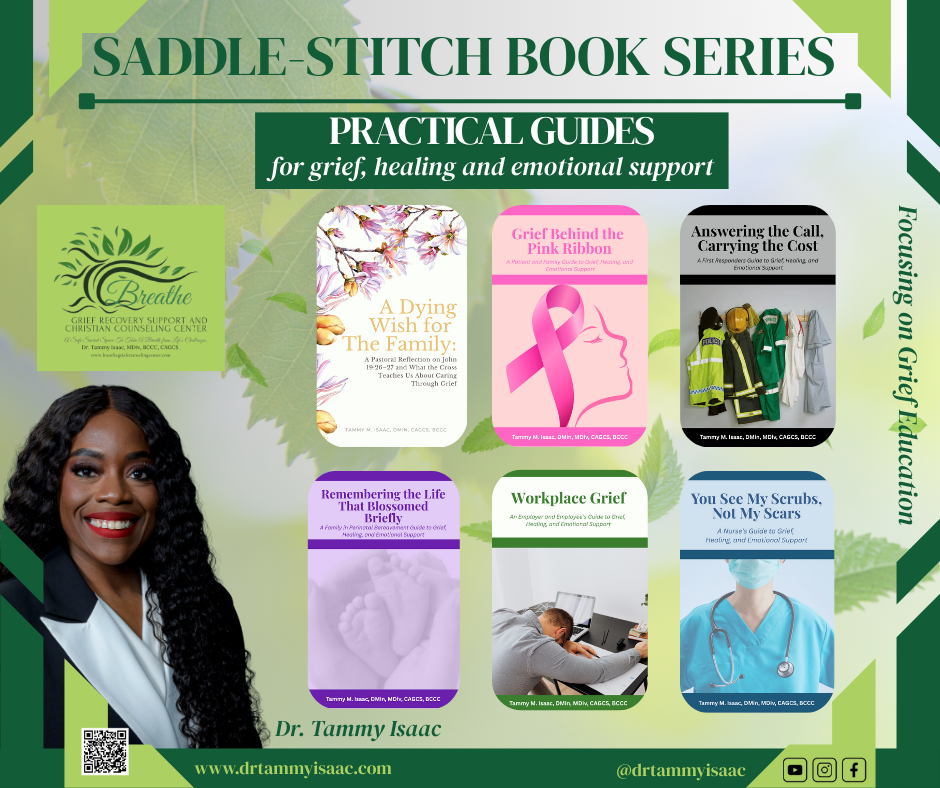
I’m grateful to share the release of my new saddle stitch book series focused on grief, emotional support, and healing. This series was created to be accessible, honest, and practical. Each booklet is designed to meet people where they are by offering language for what hurts, guidance for what feels confusing, and space to breathe through loss without pressure to rush or fix anything.


Comments