
The Mental Cloud of Grief: Understanding the Brain’s Response to Loss
- Tammy Isaac DMin

- Mar 18, 2025
- 4 min read
By Rev. Dr. Tammy Isaac

Grief is more than just an emotional experience—it affects us physically, spiritually, and even cognitively. Many people navigating loss find themselves struggling with what’s often called grief brain fog—a mental cloudiness that makes it hard to focus, remember things, or even complete simple tasks. If you’ve ever walked into a room and completely forgotten why, struggled to finish a sentence, or found yourself rereading the same paragraph over and over, you are not alone.
In a recent episode of my podcast, Permission to Breathe, I explored why grief fog happens, how it affects our daily lives, and what we can do to find our way through it. Let’s dive deeper into these ideas and offer some practical steps to bring clarity back to your mind and heart.
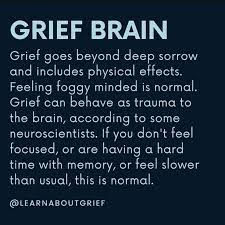
Why Does Grief Cause Brain Fog?
Grief isn’t just a feeling—it’s a full-body response to loss, and our brains are no exception. When we experience the death of a loved one, our minds don’t just accept their absence overnight. Dr. Mary-Frances O’Connor, author of The Grieving Brain, explains that our brains are wired for attachment. They expect our loved ones to be present in our daily routines, and when that person is gone, our brains have to go through a process of relearning—a process that takes time and energy.
This rewiring can lead to:
Memory issues – Forgetting tasks, dates, or why you walked into a room.
Mental exhaustion – Feeling drained after simple conversations or tasks.
Lack of focus – Difficulty concentrating on work, reading, or making decisions.
Disorientation – Feeling "out of it" or disconnected from your surroundings.
Additionally, grief floods the brain with stress hormones like cortisol, which can make it harder to think clearly, process information, and regulate emotions.

The Hobbit & The Fog of Grief
When I think about grief brain fog, I’m reminded of The Hobbit: The Desolation of Smaug. If you’ve seen the movie, you might recall how much of the journey is covered in mist, making it difficult for the characters to see what’s ahead. And then there’s Smaug—the dragon lurking beneath it all.
Grief fog feels the same way. It clouds our vision, makes the path ahead uncertain, and leaves us vulnerable to fear and exhaustion. But just like in the story, the fog doesn’t last forever. With time, patience, and intentional practices, clarity begins to return, and we find our way forward.
How Long Does Grief Brain Fog Last?
One of the most common questions I hear is, "How long will I feel like this?" The truth is—there’s no set timeline. For some, grief brain fog lasts a few weeks. For others, it lingers for months or even years, especially if the loss is traumatic or unresolved. But here’s what I want you to know: You are not broken. Your brain is healing, and clarity will return.
If grief brain fog is interfering with your daily life—your work, relationships, or ability to care for yourself—it may be time to seek extra support. A counselor, grief coach, or healthcare provider can help you find strategies to move through it with greater ease.
Finding Your Way Through the Fog: Practical Steps
According to Dr. Shulman, even the effects of long-term chronic stress—including grief brain fog—are reversible. She explains that mindfulness and relaxation practices help restore mental clarity and bring a sense of safety back to the brain.
Here are some simple ways to ease the mental haze of grief:
✔️ Journaling – Writing out your thoughts helps externalize grief and make it more manageable.
✔️ Cognitive Behavior Therapy (CBT) – Restructuring negative thought patterns can bring healing.
✔️ Counseling & Therapy – Talking to a professional can provide guidance and tools.
✔️ Creativity – Engaging in music, art, or writing can help process emotions.
✔️ Meditation & Prayer – Finding stillness in God’s presence can bring peace and clarity.
Dr. Shulman reminds us, "If we don’t work through the traumatic experiences that we have, they will continue to be an obstacle in our lives." Healing from grief requires us to be intentional about our thoughts, our emotions, and our well-being. The fog will lift, but we must give ourselves grace as we walk through it.

Give Yourself Permission to Breathe
If you’re experiencing grief brain fog, I want to encourage you today:
You are not losing your mind—your brain is grieving too.
Healing is happening, even if you can’t see it yet.
Clarity will return, one breath at a time.
Be patient with yourself. Take small steps forward. And most importantly, give yourself permission to breathe.
If this topic resonated with you, I’d love to hear your thoughts. Have you experienced grief brain fog? How did it affect you? Share your experience in the comments or connect with me on social media.
And if you haven’t already, be sure to subscribe to my podcast, Permission to Breathe, where we explore the intersection of grief, faith, and healing.
Until next time, keep breathing, keep healing, and keep moving forward.

🎧 Catch up now! Listen on Spotify, Apple Podcasts, or wherever you get your podcasts.
💬 If you’ve already listened, what resonated with you the most? Drop your thoughts below! 👇🏾


Comments