
When Someone Dies and Reconciliation Never Came

There are relationships that end long before a person dies, and there are relationships that remain emotionally unfinished until death makes reconciliation impossible. When someone dies after a complicated relationship, grief may not look the way we expect. There may be sadness, but sadness may not be the only emotion present. There may be anger about what happened, disappointment about what never changed, longing for particular memories, or relief that a difficult relationship can no longer continue in the same way. There may also be questions that suddenly feel more urgent because the person who could have answered them is no longer here.
This kind of grief can be difficult because death often changes how we are expected to speak about people. Once someone dies, there can be pressure to soften the story. We remember the good. We choose respectful words. We may avoid mentioning painful experiences because we have been taught that speaking honestly about the dead is somehow inappropriate.
But death does not change the history of a relationship. If someone hurt you while they were alive, their death does not make the hurt disappear. If you needed distance, death does not mean the boundary was unnecessary. If the relationship included love, laughter, connection, and meaningful memories, acknowledging the painful parts does not erase those experiences either.
Both can belong to the same story.
When Love Was Not the Only Thing There
One reason complicated relationships can produce complicated grief is because attachment does not always disappear simply because a relationship became painful. We can love people who disappoint us. We can want approval from people whose approval has repeatedly cost us something. We can miss certain parts of someone while knowing that being in relationship with them was difficult. We can understand why someone behaved the way they did without deciding that their behavior was acceptable.
This is part of what makes Jennette McCurdy's memoir I'm Glad My Mom Died such an interesting point of departure for conversations about grief. The title immediately confronts our expectations about what someone is supposed to feel when a mother dies. Yet underneath the title is a much larger story about attachment, control, identity, harm, and what it means to understand a relationship differently after death. The question is not simply whether we loved the person who died.
Sometimes the more important question is: What did loving them require of us?
Sometimes We Grieve What Never Happened
One of the least recognized losses in complicated grief is the loss of possibility. As long as someone is alive, there is another tomorrow. Even when we have stopped expecting the relationship to change, some possibility remains. There could be another conversation. Someone could finally take responsibility. An apology could come. A parent could begin to understand their adult child differently. Estranged family members could reconnect.
Death changes that. Suddenly, what was unlikely becomes impossible. The apology will not come. The conversation will not happen. The person will not become who you needed them to become. There will be no future moment when everything is finally acknowledged. So sometimes we are not only grieving a person. We are grieving a possibility. There is no funeral for that loss. No one sends flowers because the reconciliation you quietly hoped for can no longer happen. There is no obituary for the relationship you needed but never received.
Yet that loss deserves to be mourned.
Relief Does Not Tell the Whole Story
Some people also experience relief after the death of someone with whom they had a difficult relationship. That can be frightening to admit. Relief may come because the conflict has stopped. The anticipation has stopped. The emotional preparation before the phone call, visit, holiday, or family gathering has stopped. Something that occupied considerable emotional space is no longer requiring the same response.
Relief does not necessarily mean someone wanted the person to die. It may tell us something about what living in that relationship required. Instead of immediately judging relief, we might become curious about it. What ended when this person died? What am I no longer preparing myself for? What was I carrying that I did not recognize as heavy until I was no longer carrying it?
Those questions can tell us something important about the relationship.
Grief and Guilt Can Sound Similar
Complicated loss can also cause grief and guilt to become confused.
Grief may say, I wish our last conversation had been different.
Guilt may say, Our last conversation was my fault.
Grief may say, I wish I had another opportunity.
Guilt may say, I should have done more.
Grief mourns what has been lost. Guilt assigns responsibility. There may certainly be things we regret after someone dies. We may recognize choices we would make differently now. But wishing an ending had been different does not automatically mean we caused the ending. Sometimes what feels like guilt is actually the pain of finality. There is no more time. That realization can be difficult enough without turning every regret into an accusation against ourselves.
Your Family May Remember Someone You Did Not Know
Death can also reveal how differently members of the same family experienced the person who died.
One sibling may remember a loving parent while another remembers criticism or emotional distance. One relative may speak about generosity while another remembers control. Neither person necessarily has to be lying. They may have had different relationships with the same person.
This can become especially difficult around funerals and memorials, where families often create a shared public story about the deceased. If that story does not resemble your experience, you may feel isolated in a room filled with people who are supposedly mourning the same person. You do not have to correct everyone else's memories. But you also do not have to surrender your own. Their experience belongs to them. Yours belongs to you.
When Reconciliation Never Comes
We often talk about healing as though eventually there should be a moment when everything becomes resolved. Someone apologizes. Forgiveness happens. The relationship is restored. Everyone finally understands. Life does not always give us that ending. Some people die without acknowledging what happened. Some relationships remain estranged. Some questions remain unanswered. Some apologies never come. Reconciliation may have been hoped for, imagined, attempted, or perhaps never possible at all. That does not mean the person who remains alive must spend the rest of life waiting emotionally at the place where the relationship stopped.
There may never have been reconciliation, but there can still be movement. That movement may involve examining what the relationship taught you about yourself. It may involve recognizing patterns you do not want to repeat. It may mean deciding that certain ways of communicating, controlling, withholding, pleasing, or remaining silent will not continue through you. You cannot change the relationship that already happened. But you can change the authority it has over the life you are still living.
You Can Grieve the Relationship as It Was
Perhaps one of the greatest permissions we can give ourselves after a complicated death is permission to stop trying to decide what we are supposed to feel. You do not have to prove that the person was entirely good before you are allowed to miss them. You do not have to prove that they were entirely harmful before you are allowed to acknowledge what happened. You do not have to produce a simple story about a relationship that was never simple.
You can grieve the person.
You can grieve what happened between you.
You can grieve what you needed and never received.
You can grieve the reconciliation that never came.
And you can decide what parts of that relationship you will carry forward and what parts will no longer determine how you live. Sometimes grief is not about finding a way to make peace with everything that happened. Sometimes it begins with being able to tell the truth about what happened and recognizing that the truth deserves a place in your mourning.

Listen to the companion episode: This blog accompanies the Permission to Breathe podcast episode, “When Grief Comes From Complicated Relationships,” where I explore grief when love, hurt, attachment, resentment, relief, and longing remain part of the story after someone dies.
Listen today on Apple Podcasts, Spotify, YouTube, or Audible.
Show Notes
When Grief Comes From Complicated Relationships
What happens when someone dies and the relationship was never simple? You may be grieving someone you loved while also carrying anger, hurt, disappointment, relief, or memories of why you needed distance in the first place.
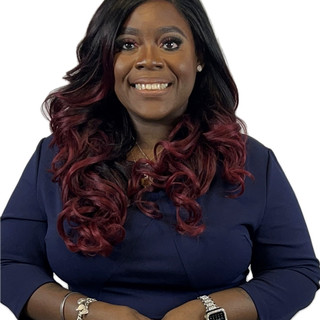
In this episode of Permission to Breathe, Dr. Tammy Isaac explores grief after a complicated relationship. Using Jennette McCurdy’s memoir I’m Glad My Mom Died as a point of departure, she examines what happens when death ends the relationship but does not resolve everything that happened within it.
In This Episode
• Why death does not rewrite the history of a relationship• When love and hurt came from the same person• Grieving what you needed but never received• The loss of the possibility that the relationship might someday change• Why relief can sometimes accompany grief• The difference between guilt, regret, and grief• When family members remember the deceased differently• Mourning when reconciliation never happened• Giving yourself permission to grieve the relationship as it actually was
Mentioned in This Episode
I’m Glad My Mom Died by Jennette McCurdy
Connect With Dr. Tammy Isaac
Website: www.drtammyisaac.comFacebook & Instagram: @drtammyisaac, Breathe Counseling Center: @BreatheCounselingCenter
About Permission to Breathe
Permission to Breathe is a podcast hosted by Dr. Tammy Isaac exploring grief, loss, spirituality, healthcare, relationships, and the experiences people are often expected to carry quietly.
You do not have to rewrite a complicated relationship in order to grieve it. You are allowed to mourn what you loved, what hurt, what never changed, and what will now remain unfinished.

New Book Coming Soon
My upcoming book, Living with the Grief Inside the Ache: Rebuilding Life When Chronic Pain Changes Everything, is on the way. This book continues the conversation I began in The Grief Inside the Ache: Pain Led. Grief Followed. It explores how chronic pain and chronic illness affect more than the body. They touch identity, relationships, work, faith, rest, joy, and the grief of living in a changed life.
This book is for those living with pain or illness, and for the people who love and support them. My hope is that it gives readers language for what they have carried silently, permission to grieve what has changed, and encouragement to keep rebuilding a life that still belongs to them.


Comments